Introduction
For centuries, the craft of violin making—known as luthiery—has been passed down through generations of artisans who rely on intuition, trial and error, and hands-on experience. Luthiers meticulously shape wood, select varnishes, and tune plates to coax the perfect tone from each instrument. But now, engineers at the Massachusetts Institute of Technology (MIT) have developed a groundbreaking tool that could transform this age-old trade: a virtual violin that simulates the instrument's physics with remarkable precision. Published in the journal npj Acoustics, this computer model does more than just mimic a violin's sound; it reproduces the underlying mechanical behavior, offering luthiers a new digital workshop to explore design possibilities without cutting a single piece of wood.
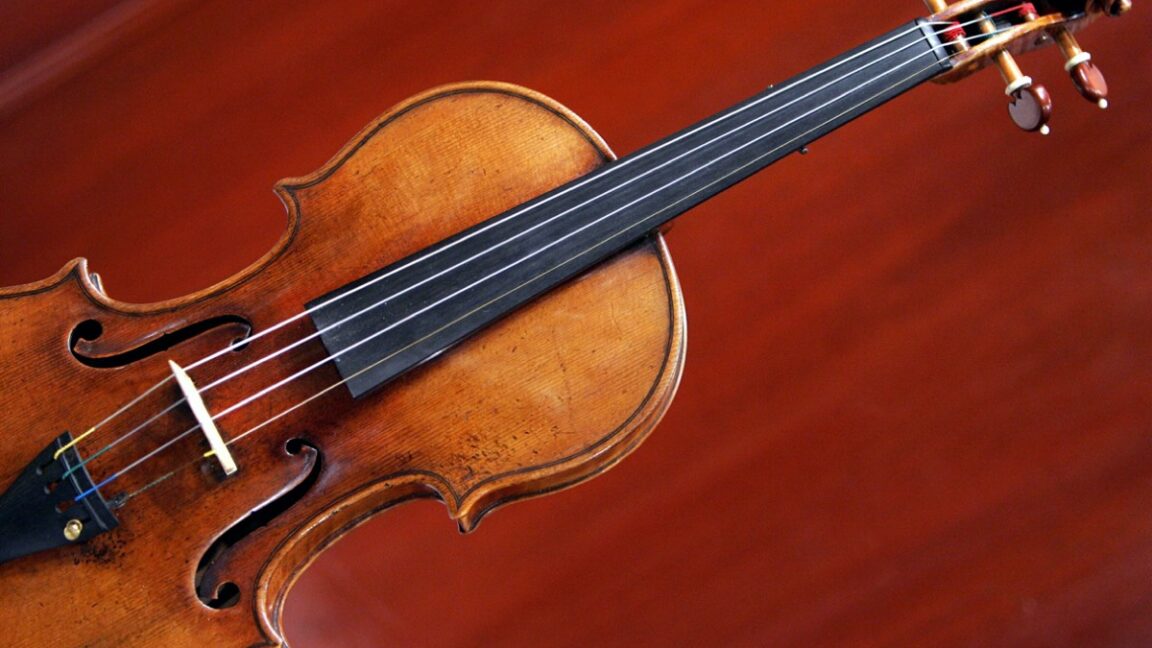
The Traditional Art of Luthiery
Violin makers, or luthiers, have long relied on empirical knowledge. They learn through apprenticeship, developing an ear for subtle differences in wood density, arching, and thickness. The final sound of a violin is shaped by countless variables: the species and grain of the wood, the shape of the bridge, the tension of the strings, and even the application of varnish. Achieving the rich, resonant tone that defines a concert-quality instrument often demands years of experimentation and extreme attention to detail.
This artisanal process, while producing masterpieces like those from the celebrated "Golden Age" of violin making (circa 1600–1750), can be inefficient. Each new design iteration requires building a physical prototype, testing it, and often discarding it. The legendary instruments of Antonio Stradivari, the Amati family, and Giuseppe Guarneri remain benchmarks of perfection—yet scientists and luthiers still debate why they sound so extraordinary. The MIT team aimed to bring modern computational power to these centuries-old questions.
The Innovation: A Physics-Based Virtual Violin
Unlike most existing software for simulating violin sounds—which rely on sampling or averaging recordings of real instruments—the MIT model is rooted in the fundamental physics of how the instrument vibrates and radiates sound. Co-author Nicholas Makris explained, “We’re not saying that we can reproduce the artisan’s magic. We’re just trying to understand the physics of violin sound, and perhaps help luthiers in the design process.” This distinction is crucial: the virtual violin calculates the precise mechanical response of every component, from the strings to the bridge to the soundboard, rather than simply playing back pre-recorded notes.
The simulation captures the complex wave propagation inside the instrument, accounting for factors like material stiffness, damping, and resonance. When a string is plucked in the virtual model, it generates a realistic acoustic output that matches the behavior of a real violin. The team tested their model against actual instruments and found close agreement, confirming that the simulation accurately predicts how changes in design affect the sound.
How It Works and Its Advantages
The simulation uses finite element analysis, a technique that breaks the violin geometry into tiny interconnected elements. By solving equations of motion and wave propagation across these elements, the model computes how the entire structure vibrates in response to string forces. This approach provides detailed information about the modal shapes (the specific patterns of vibration at different frequencies) and the resulting sound spectrum.
One major advantage is that luthiers can virtually tweak any parameter—thickness of the top plate, density of the wood, shape of the f-holes—and immediately hear the effect on the tone. This rapid feedback loop could drastically reduce the number of physical prototypes needed, saving time and materials. Moreover, because the model is based on physics rather than statistical averages, it can simulate novel designs that have never been built, potentially leading to entirely new sonic possibilities.

Key Features of the MIT Virtual Violin
- Physics-driven simulation that models real mechanical vibrations, not sampled sounds.
- High-fidelity audio output for plucked and bowed strings (with future extension to bowing).
- Parametric design tools that allow instant modification of material and geometric properties.
- Validation against real instruments to ensure accuracy.
Implications for Luthiers and Research
For the luthier community, this tool offers a new way to explore the relationship between construction and sound. Rather than relying solely on tradition and instinct, craftspeople can now use data-driven insights to refine their designs. The virtual violin may help answer persistent questions about the superiority of Golden Age instruments: for instance, by simulating different wood treatments or arching profiles, researchers can isolate which factors contribute most to the coveted sound of a Stradivari.
The technology also opens doors for education. Aspiring luthiers could learn acoustics interactively, testing how small changes affect tone without needing access to a full workshop. Additionally, because the model is built on open physics principles, it can be extended to other string instruments like cellos and violas, broadening its potential impact.
Read more about traditional luthiery before diving into the simulation details—or skip directly to the working principles if you prefer the technical aspects.
Conclusion
The MIT virtual violin represents a significant leap in computational acoustics, providing a bridge between empirical craftsmanship and scientific precision. While it will not replace the luthier’s artistry, it equips them with a powerful new design tool to experiment and innovate. As Makris put it, the goal is not to demystify the magic but to illuminate the physics behind it—and in doing so, help luthiers create instruments that sing with even greater clarity and beauty. The future of violin making may well involve virtual prototyping, digital tweaking, and a deeper understanding of the mechanics that turn wood and string into music.