The recent cyberattack on the Canvas learning management system sent shockwaves through educational institutions across the United States. A data extortion group called ShinyHunters defaced the login page with a ransom demand, threatening to leak data on millions of students and faculty. This incident forced Instructure, Canvas's parent company, to take the platform offline, disrupting classes and final exams. Below, we answer key questions about what happened, who is responsible, and what it means for schools and colleges.
What exactly happened in the Canvas breach?
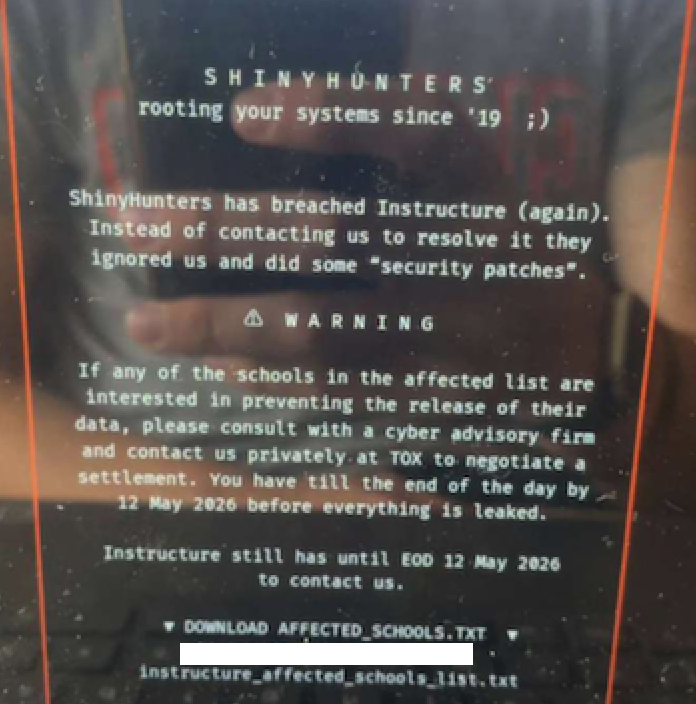
On May 7, students and faculty at dozens of schools and universities discovered that the Canvas login page had been replaced with a ransom message from the cybercrime group ShinyHunters. The message demanded payment to prevent the leak of sensitive data from 275 million users across nearly 9,000 institutions. In response, Instructure disabled the platform, displaying a maintenance notice. This came just days after Instructure acknowledged a separate data breach on May 6, where ShinyHunters claimed to have stolen private messages, names, email addresses, and student IDs. The attack effectively halted classes, assignments, and communications at a critical time—during final exams for many institutions.

Who is behind the attack?
The attack was perpetrated by a cybercrime group known as ShinyHunters, which has gained notoriety for large-scale data breaches and extortion schemes. They claimed responsibility for both the initial data theft and the subsequent defacement of the Canvas login page. The group demanded a ransom to prevent the release of stolen data, initially setting a deadline of May 6, later extended to May 12. ShinyHunters has historically targeted education technology platforms and other services, leveraging stolen credentials and vulnerabilities to access sensitive information. Their tactics include defacing websites to amplify pressure on victims and their customers.
What data was stolen—and what wasn't?
According to Instructure's May 6 statement, the stolen information includes “certain identifying information” such as names, email addresses, and student ID numbers, as well as private messages exchanged between users on the platform. ShinyHunters claims the haul also includes phone numbers and billions of messages. Importantly, Instructure stated that there is no evidence that passwords, dates of birth, government IDs, or financial data were compromised. The company believes the incident has been contained and that no ongoing unauthorized activity was detected as of May 6. However, the full scope of the breach remains under investigation, and institutions are advised to monitor for unusual activity.
How did Instructure respond to the defacement?
After the ransom message appeared on the Canvas login page on May 7, Instructure acted quickly by taking the entire platform offline. They replaced the defaced page with a generic message stating: “Canvas is currently undergoing scheduled maintenance. Check back soon.” This effectively prevented users from accessing coursework, submitting assignments, or communicating through the system. The company posted updates on its status page, indicating they anticipated restoring service soon. However, the timing—during final exams for many schools—made this disruption particularly painful for students and educators.
Why is this attack especially damaging?
The attack could hardly have come at a worse time. Many schools and universities that rely on Canvas were in the middle of final exams, when the platform is essential for submitting papers, taking tests, and receiving grades. A prolonged outage can delay graduation, disrupt academic progress, and cause widespread frustration. Moreover, the breach of private messages—containing student-teacher communications and peer discussions—raises serious privacy concerns. Even if the stolen data lacks credit card numbers, the exposure of personal details and internal conversations can lead to phishing attacks, identity theft, and reputational harm for institutions.
What was the ransom demand and deadline?
ShinyHunters posted an extortion message on the defaced Canvas login page, instructing affected schools to negotiate their own ransom payments to prevent publication of their data. The group initially set a deadline of May 6 for Instructure to pay, but later extended it to May 12. The ransom amount has not been publicly disclosed. Notably, the message advised schools to contact the hackers directly, suggesting that even if Instructure refuses to pay, individual institutions could still be targeted. This tactic increases pressure on the company and its clients, compounding the chaos.
What should affected institutions do now?
Institutions should first confirm whether they are among the affected by checking with Instructure or their IT department. They should immediately reset passwords for all Canvas users and enable multi-factor authentication if available. Additionally, they should notify students and faculty about the breach, advising them to watch for phishing emails or suspicious messages that might exploit stolen data. Schools should also work with cybersecurity specialists to assess their own systems for any signs of compromise. While Instructure states the breach is contained, ongoing monitoring is crucial. For the longer term, institutions may consider diversifying their learning management systems to reduce dependency on a single vendor.