The Rise of Block-Based Editors
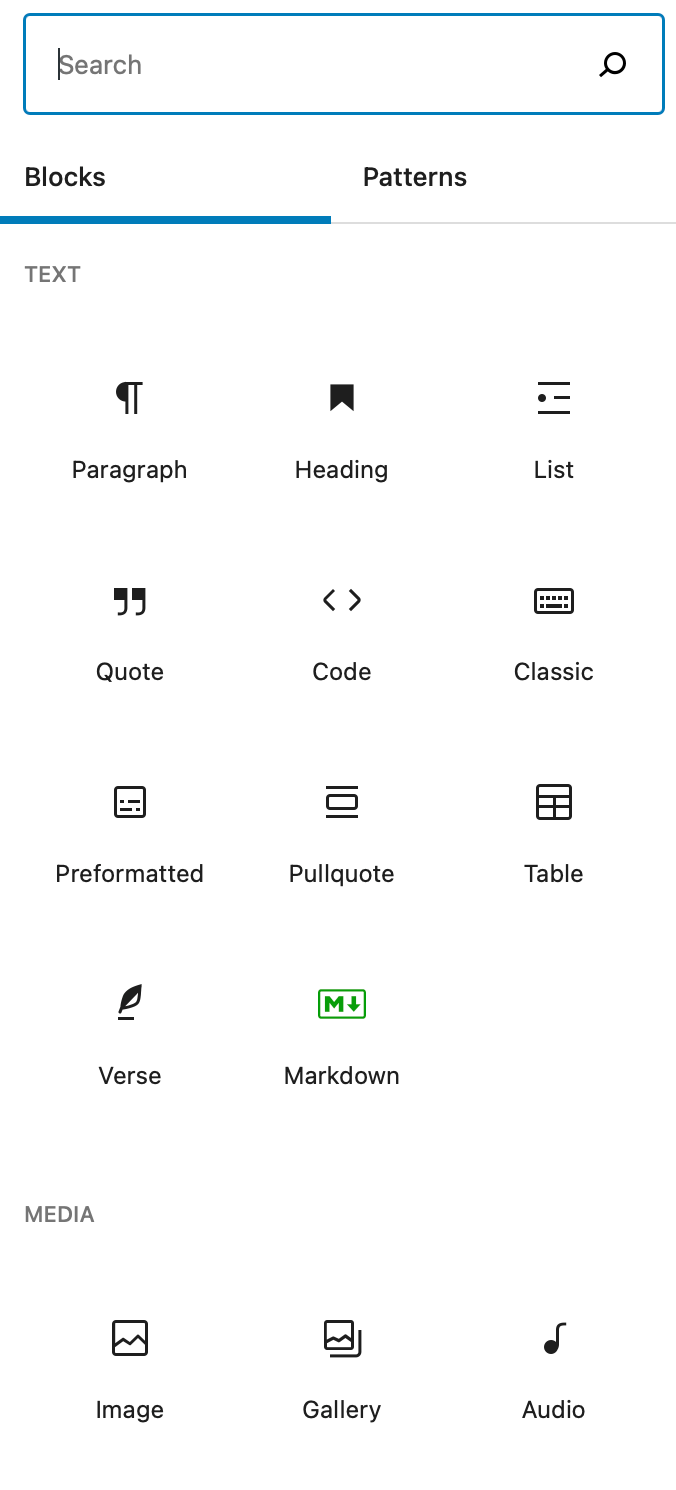
If you've written a blog post or taken notes online recently, you've likely encountered a block-based editor. WordPress, Medium, Notion, and countless other tools now let you build content by inserting discrete blocks—paragraphs, images, tables, videos, and more. The familiar / key shortcut has become a near-universal trigger for adding new blocks. Yet despite this shared concept, each application implements blocks in its own proprietary way.
The Problem: Isolated Block Ecosystems
Today, every app that wants to support blocks must build them from scratch. Want a calendar block? A Kanban board? An interactive chart? You'll need to code it yourself. This fragmentation means end-users are stuck with whatever blocks their chosen platform happens to offer. If you switch from WordPress to Notion, you lose access to specialized blocks you relied on. Developers waste time reinventing the wheel, and users suffer from limited, non-portable functionality.
The result: a disjointed web where blocks can't be shared, moved, or reused across different environments. This is where the Block Protocol comes in.
Introducing the Block Protocol
The Block Protocol is a free, open, and non-proprietary standard that defines how embedding applications (like editors and CMSs) can host blocks—and how blocks can communicate back. By following this protocol, any block can be used in any compliant application. Developers write a block once, and it works everywhere.
How It Works
At its core, the Block Protocol specifies a simple JSON-based message passing system between the host app and the block. The block receives data (like user content or configuration) and sends updates back (e.g., when content changes). This abstraction lets the block focus on rendering and functionality, while the host handles storage, permissions, and the user interface for inserting/blocks.
An early draft of the protocol has been released, along with sample blocks and a simple editor that demonstrates the concept. You can check it out on the official site.
What Can Be a Block?
Virtually anything that makes sense in a document or on the web: paragraphs, lists, tables, diagrams, Kanban boards, order forms, calendars, videos, interactive data visualizations, and more. The protocol also supports structured and typed data—meaning blocks can handle complex interactions, like editing a database or filling out a form.

Benefits for Developers and Users
- For app developers: Write the hosting code once and instantly support a growing library of block types without reinventing each one. Focus on your core product, not on recreating features.
- For block developers: Build a block once and distribute it across every Block Protocol-compatible editor—WordPress, Notion, custom CMSs, note-taking apps, and more. Reach a larger audience with minimal extra work.
- For end-users: Enjoy a consistent, rich ecosystem of blocks that you can take with you from one tool to another. No more losing functionality when you switch apps.
Building an Open-Source Community
The Block Protocol is 100% free and open. The specification, sample code, and reference implementation are all open-source. The goal is to foster a community that creates a massive library of high-quality blocks—much like npm or WordPress plugin repositories, but for blocks that are truly cross-platform.
Get Involved
If you work on any editor—blogging platform, note-taking app, CMS, or e-learning tool—consider integrating the Block Protocol. You can start by reading the protocol spec and trying the demo editor. Developers interested in building blocks are encouraged to contribute to the open-source block library.
The web deserves better blocks. Let's build them together—once, and for everyone.