Introduction
For plants, living on sunlight is a high-stakes gamble. The very rays that fuel their growth also carry ultraviolet radiation capable of snapping DNA strands and degrading essential molecules. Moreover, sunlight intensity is anything but steady—it shifts from soft morning glow to blazing afternoon heat, from dappled shade to sudden full exposure within seconds. Plants must capture solar energy in both trickle and deluge conditions. As one scientist puts it, “Think of a cloud obscuring the sun… then suddenly revealing it.” Success depends on a hidden, mathematical dance unfolding inside every leaf.
The Perils of Sunlight
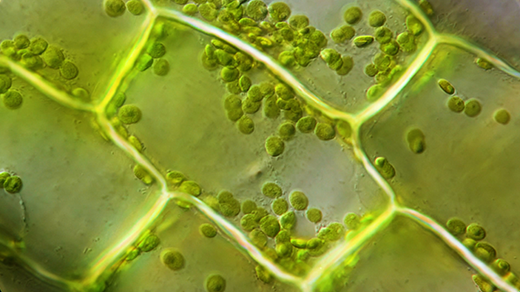
Without protection, high-energy UV rays can cause direct damage to DNA and proteins. Even visible light, when too intense, leads to oxidative stress. Chloroplasts—the organelles responsible for photosynthesis—must constantly gauge incoming photons and adjust their systems accordingly. If they capture too much energy, free radicals accumulate; if too little, the plant starves. This delicate equilibrium is maintained through complex feedback loops that operate on millisecond timescales.
The Need for Flexibility
Plants cannot move to escape changing light conditions. Instead, they rely on rapid molecular adjustments. When a cloud passes, the rate of photosynthesis drops; when the sun reappears, it must ramp up instantly without damaging the cell. This requires a dynamic balancing act between light-harvesting complexes and electron transport chains. The process is so finely tuned that it resembles a real-time mathematical optimization problem.
The Molecular Machinery
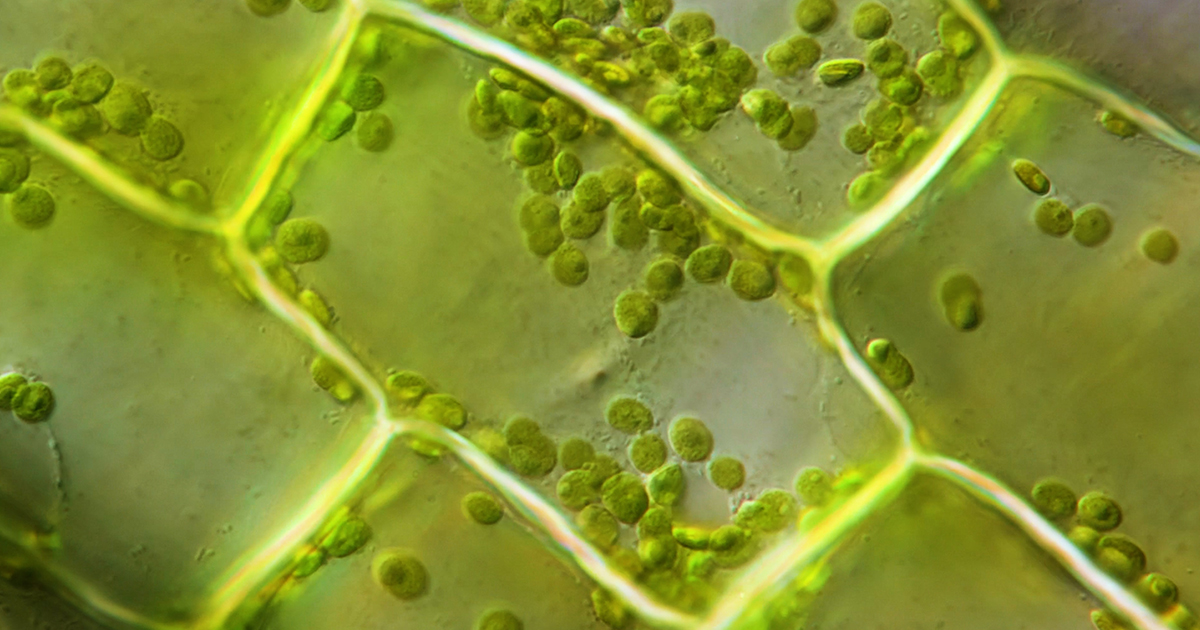
At the heart of this regulation lie the photosystems—PSII and PSI—which convert light into chemical energy. Between them flows a stream of electrons, and the rate of flow must match light intensity. To control it, plants use non-photochemical quenching (NPQ) to safely dissipate excess energy as heat. Additionally, the Calvin cycle adjusts its activity to consume the electrons produced. The coordination between these two pathways is governed by chemical signals like pH gradients and redox states.
Mathematical Coordination
Researchers have discovered that the regulation follows precise mathematical rules. For instance, the fraction of light absorbed vs. quenched obeys a logarithmic curve, ensuring smooth transitions. Computer models of chloroplast behavior reveal that plants operate near a critical point—an edge where slight changes trigger large responses. This allows them to react quickly while remaining stable. The hidden dance is thus a choreography of probabilities, thresholds, and feedback that has evolved over millions of years.
Understanding this dance has practical implications. By mimicking these mathematical strategies, scientists hope to engineer crops that are more resilient to fluctuating sunlight, boosting yields without extra water or fertilizer. The next time you see a sunflower tracking the sky, remember: beneath its petals, a silent, numerical symphony is playing.