When you gaze at a sunflower or a fern, you might see beauty, but beneath the surface lies a hidden world of mathematical precision. Plants live a dangerous life, constantly bombarded by the sun’s ultraviolet rays that can snap DNA strands and degrade essential molecules, all while facing wild fluctuations in light intensity—from the gentle gray of a cloud passing overhead to the blinding brilliance of a summer afternoon. To not just survive but thrive, they rely on an elegant mathematical dance. In this listicle, we uncover seven astonishing ways plants use mathematics—from Fibonacci sequences to quantum optimization—to turn light into life without being consumed by it.
1. The Fibonacci Code in Leaf Arrangements
Have you ever noticed how leaves spiral around a stem in a predictable pattern? That’s the Fibonacci sequence at work—each new leaf grows at an angle of about 137.5 degrees (the golden angle) from the previous one. This isn’t a coincidence: it’s a mathematical optimization that minimizes shading. By staggering leaves in a spiral, each leaf captures maximal sunlight without blocking its neighbors. In dense canopies, this arrangement can boost light interception by up to 50%. It’s a silent, mathematical strategy plants have evolved over millennia.
2. Chloroplasts That Dodge and Weave
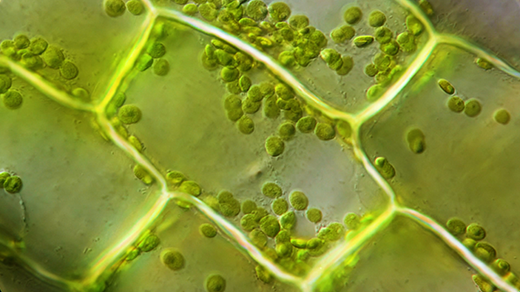
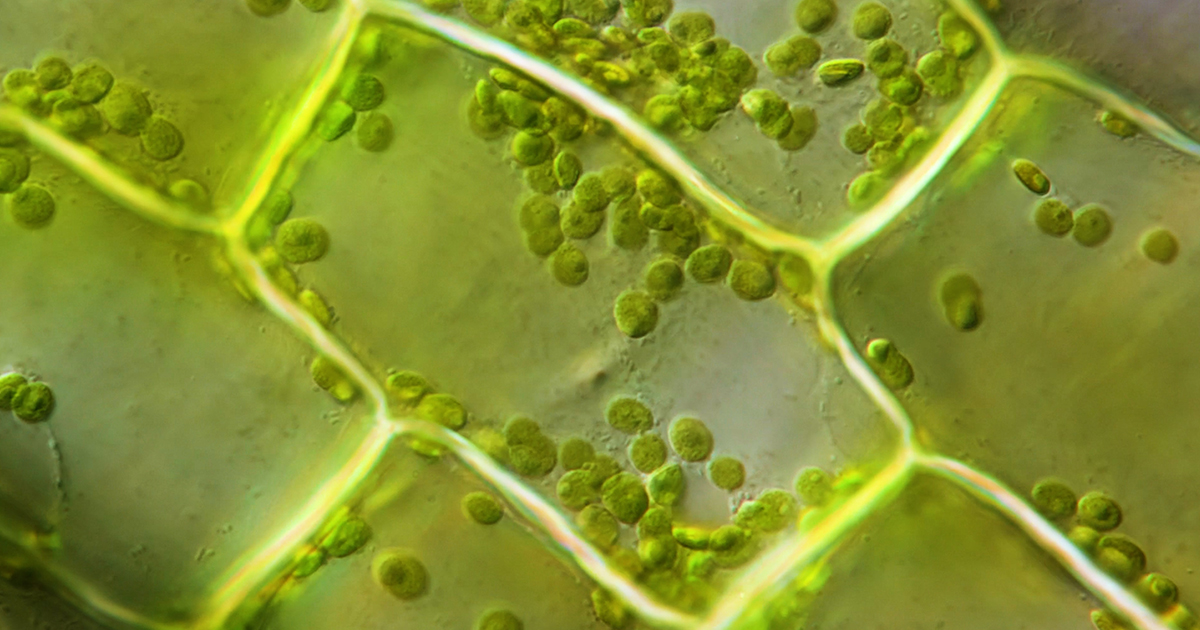
Inside plant cells, chloroplasts aren’t static. They perform a carefully choreographed dance: in dim light, they spread out to catch every photon; in intense sun, they cluster together to avoid damage. This movement follows a mathematical rule of probability—chloroplasts adjust their positions based on the local light gradient. Studies show that the speed and direction of their movement can be modeled by diffusion equations, helping the plant balance energy harvest with photoprotection. It’s a real-time optimization problem solved without a brain.
3. Stomata: Tiny Gates With a Cost-Benefit Equation
Stomata—pores on leaves—open to take in carbon dioxide for photosynthesis but lose precious water in the process. Plants use a mathematical trade-off: they calculate the marginal cost of water loss per unit of carbon gained. This optimization, known as the water-use efficiency curve, dictates when stomata open or close. Recent models show that plants adjust stomatal density and behavior using Bayesian-like inference, weighing past weather patterns against current conditions. The result is a frugal balance that conserves water while maximizing photosynthesis.
4. Circadian Rhythms: The Plant’s Internal Clock
Every plant has an internal 24-hour clock—a circadian rhythm driven by gene-expression cycles. This clock uses a mathematical oscillator to predict sunrise and sunset, preparing the plant for peak light hours. For instance, photosynthesis genes ramp up before dawn, and protective enzymes surge before noon heat. Researchers have modeled this oscillator as a set of differential equations with feedback loops, much like a digital timer. Even under constant light, the plant maintains its rhythm, showing that the math is hardwired at the cellular level.
5. Light Harvesting Efficiency by Quantum Math
Photosynthesis begins when a photon strikes a pigment in the antenna complex. To move that energy to the reaction center with near 100% efficiency, plants exploit quantum coherence. The energy whizzes through multiple paths simultaneously and then “chooses“ the fastest route—a process described by Schrödinger’s equation. This quantum walk is a mathematical optimization that minimizes energy loss. Without this trick, solar panels would be far less efficient. Plants have been doing quantum computing for billions of years.
6. Phyllotaxis: The Geometry of Sunflower Seeds
Sunflowers are famous for their spiraling seed patterns—typically 34 spirals one way and 55 the other (both Fibonacci numbers). This arrangement allows the maximum number of seeds to fit in the head while each gets equal space to develop. But it also optimizes light capture: the floret arrangement ensures that outer seeds don’t shade inner ones. The pattern arises from simple mathematical rules of growth repulsion between primordia, modeled by the Vogel spiral equation. Nature’s packing problem has an elegant, mathematical solution.
7. Photoprotection: A Risk-Sensitive Algorithm
When light is too intense, plants must dissipate excess energy as heat to prevent oxidative damage. They do this using a molecule called zeaxanthin, which acts as a “safety valve.” The activation of this valve follows a nonlinear feedback loop: the rate of energy dissipation is proportional to the mismatch between light absorption and metabolic capacity. Mathematically, this resembles a proportional-integral-derivative (PID) controller used in engineering. The plant constantly “calculates” the risk of photodamage and adjusts—a real-time algorithmic defense system.
From the Fibonacci spirals that orchestrate leaf placement to the quantum mechanics that whisk energy through photosystems, plants demonstrate that mathematics isn’t just a human invention—it’s the language of survival. Next time you see a leaf, remember: beneath its green surface lies an elegant, invisible dance of numbers and equations, allowing life to harness the very fire of the sun.